
Guide to Wisconsin Divorce Records
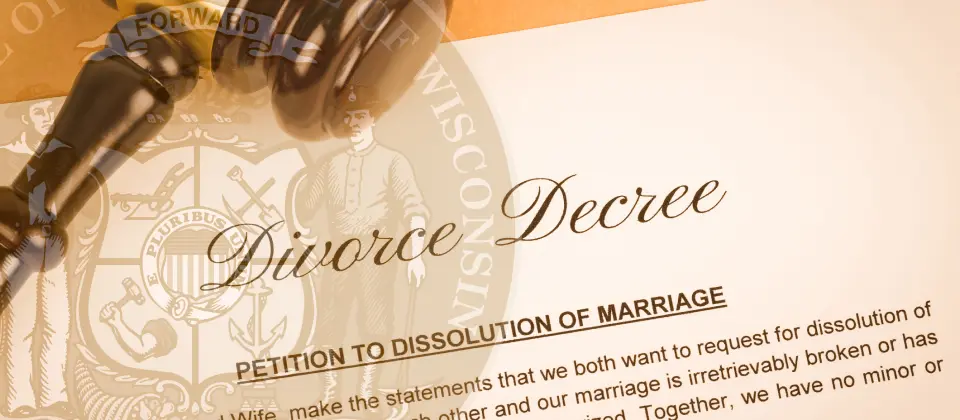
Divorce laws and record-access vary by state. Wisconsin divorce records are public information available for inspection and copying.
In Wisconsin, a divorce is a legal proceeding that terminates a marriage. Under Wisconsin law, you do not need to prove wrongdoing to file for divorce. A judge may grant the divorce if the marriage is irretrievably broken.
When a spouse files a divorce petition in the Circuit Court of the county where either spouse lives, the Clerk of Court generates case files and documents during the proceedings. These eventually become the divorce records. In Wisconsin, divorce records are used for completing administrative tasks such as new marriage license applications and name changes.
A typical Wisconsin divorce record includes the following information:
Full names of both spouses
The county where the divorce petition was filed
Name of the Circuit Court that handled the case
Date the divorce was finalized or granted
Divorce case number
Details of rulings on property division, debt allocation, alimony, and child custody/support
Judgment type (contested or uncontested)
Wisconsin maintains divorce records in both physical and digital formats. You can access recent records online through the Circuit Courts Public Access Portal. Searches can be completed using a name or case number. Although the portal shows basic case information, full case files are available in person at the courthouse. Older records, created before digital systems, are stored in paper files or on microfilm.
In Wisconsin, divorce proceedings can involve matters such as property division and child custody. As such, each divorce record reflects the specific circumstances of the case. By understanding how divorce is processed in Wisconsin, you can predict what details will appear in a record and how those records can be obtained.
Where are Wisconsin Divorce Records Stored?

Wisconsin divorce records are maintained at the county and state levels. At the county level, these records are maintained by the Clerk of Court's Office in the county where the divorce was finalized. You can access records through the Clerk's Office. Divorce records typically include, but are not limited to, pleadings, motions, orders, and the final divorce decree.
Divorce certificates or state-level records are maintained by the Wisconsin Vital Records Office. Unlike court files, these records are limited in scope. Wisconsin divorce certificates are official confirmation that a divorce occurred between two parties.
Is Wisconsin a 50/50 Divorce State
Wisconsin is a community property state, which means marital property is divided equally. Under this rule, the court presumes that all property, except for assets received as gifts or through inheritance, will be divided equally. To achieve an equitable division, the judge may award property to one spouse and order a cash payment to the other. Wisconsin courts typically consider several factors when determining how to divide property in divorce cases:
Duration of the Marriage - The length of the marriage influences how assets and debts are shared. Shorter marriages often leave spouses with more of their own property, and longer marriages lead to more equal division.
Income and Earning Capacity - A spouse with a lower earning potential may receive more property to avoid financial hardship. This factor helps prevent economic hardship after divorce.
Contributions of Each Spouse - Contributions include both financial and non-financial efforts, such as homemaking, childcare, and supporting the other spouse's career. Wisconsin recognizes that non-monetary contributions can be equally valuable.
Types of Wisconsin Divorce Records

Wisconsin divorce records are categorized into divorce certificates, divorce decrees, and divorce case files. Each type of record serves a unique administrative or legal function. For example, a certificate may be required to change one's legal name or obtain a marriage license, while a decree is necessary to verify the terms of judgment.
On the other hand, case files provide a comprehensive history of the case, including complaints, summons, motions, and hearing records.
Wisconsin Divorce Certificate (Certificate of Divorce)
A Wisconsin divorce certificate is an official document confirming the dissolution of a marriage. Unlike the divorce decree, which details judicial rulings on property division, alimony, and child support, the certificate simply verifies that the divorce occurred. A divorce certificate contains the names of both spouses, the county where the divorce was filed, and the date of divorce. Divorce certificates are issued by the Wisconsin Vital Records Office.
Divorce Decree (Final Judgment of Divorce)
A divorce decree is a court order that legally dissolves the marriage and clarifies the judge's decisions on all contested issues. Once signed and filed, the decree is enforceable against both spouses.
You can obtain a divorce decree from the Circuit Court that handled the divorce. Discussed below are some of the pieces of information you may find in a divorce decree:
Property and Debt Division - A divorce decree outlines how marital property, including assets and debts, is divided between both parties.
Alimony - A decree may include details of any spousal payments the court grants to either party. It contains the type of payment, amount, and duration of spousal support.
Child Custody and Support - If the couple has a child under 18, the divorce decree will include details of child custody arrangement, visitation, and support.
Final Judgment Date - The official date the judge signs the decree. It is also the date the marriage is officially dissolved.
Divorce Case File
In Wisconsin, a divorce case file is the official record of all documents filed during the divorce. It contains the complaint, summons, responses, motions, temporary orders, financial disclosures, custody plans, and the final judgment. In Wisconsin, case files are maintained by the Clerk of Court in the county where the divorce was filed.
How to File for Divorce in Wisconsin (Step-by-Step)
Like most states, Wisconsin has a mandatory residency requirement for anyone who wishes to file for divorce. To file for divorce in Wisconsin, you or your spouse must have lived in the state for at least six months and in the county where you are filing for at least 30 days. It is essential to confirm that you meet these residency rules or qualify for an exception before starting the divorce action.
Another key factor is whether the divorce is contested or uncontested. The type of divorce can play a key role in how much it will cost you, how complex it is, and how long it will take to complete.
Uncontested Divorce - A divorce is uncontested when both parties reach an agreement on all material issues, including division of marital property, child support, alimony, and custody and visitation. Uncontested cases are generally resolved faster and with fewer court appearances. This type of divorce allows the parties to retain greater control over decisions affecting their assets and children.
Contested Divorce - A contested divorce occurs when the spouses are unable to reach an agreement on one or more issues. Common areas of disagreement include custody, visitation, support, or property division. Contested cases are usually resolved by a judge after a trial.
If users meet Wisconsin's residency requirement and have determined the type of divorce that applies to their situation, they may proceed with the filing steps outlined below.
Step-by-Step Divorce Process
In Wisconsin, all Circuit Courts apply the same legal standards for divorce. However, the procedures for handling a divorce may vary by county. As such, it is best to find out what is applicable with the Clerk of the Circuit Court in the county where you plan to file. Generally, the divorce process in the state depends on whether the case is contested or uncontested and whether the couple has a child under 18.
Prepare the Filing Packet
In Wisconsin, the first step in a divorce is preparing the initial paperwork. This involves gathering, completing, and organizing all necessary forms for submission to the Circuit Court.
Identify the Divorce Path (1A vs. 1B) - This is where you decide if the divorce will be contested or uncontested.
Prepare the Required Documents - Assemble the following documents:
Petition for Divorce - This is the first document you must file with the Clerk of Court. Filing this petition officially begins the divorce process. In the form, you must provide basic information about the marriage and state the relief you are requesting.
Summons - This form is used to notify the spouse that they filed a petition against them.
Confidential Petition Addendum - It is used to provide sensitive personal information to the court.
Any other required forms are determined by the type of divorce being filed. You can access them through your local court website.
Filing Fees and Fee Waivers - The cost of filing a divorce in Wisconsin ranges between $184 to $209, depending on the type of divorce being filed. People can contact the Clerk of Court in the county where they intend to file for the exact fee schedule. If individuals cannot afford to pay the filing fee because they have a very low income, they can ask the judge to waive the filing fee.
File the Case
After gathering your paperwork and preparing the applicable filing fee, you can take the following steps to file the case:
Where to File - In Wisconsin, divorce paperwork must be filed with the Circuit Court in the county where one of the spouses lives.
Filing Methods - You can file your completed paperwork using any of these methods based on your preference and availability:
In person - To file in person, you must appear personally at the Circuit Court Clerk's Office to submit all required documentation and pay the appropriate filing fees.
Mail - Some Wisconsin counties allow divorce filings by mail. If permitted, you must send the completed forms along with proof of payment for the filing fee to the Circuit Court Clerk's Office.
Electronic Filing (eFiling) - Several Wisconsin counties now offer electronic filing for divorce cases. You may file the case electronically if the county's local court system supports e-filing of court documents.
What You Receive - Regardless of the filing method adopted, you will receive the following after filing a divorce case in Wisconsin:
Assigned a case number to help you track the divorce case
The name of the judge who will handle the case
Summons if the divorce is a contested case
Initial court notices or scheduling information
Service of Process (Primarily for Contested Cases)
In a contested case, you must formally notify your spouse that you have filed a petition against them. This official notice is known as service of process.
You may serve your spouse using a private process server, the county sheriff's office, or certified mail. Proof of service must then be filed with the Circuit Court. If your spouse cannot be located or service cannot be accomplished by conventional means, the court may authorize service by publication. This allows you to notify your spouse about your complaint through a newspaper.
Early Case Phase and Temporary Orders
During the early stages of a divorce proceeding, courts often try to maintain the status quo. This ensures that the case does not disrupt children's family life or either party's life during the divorce. In Wisconsin, discovery is an important part of this phase and typically results in temporary orders. These orders provide short-term solutions to pressing issues involving custody, property, or finances until the case is resolved.
During this period, both spouses may take actions to meet immediate needs, including:
Exchanging relevant information, such as financial documents, to understand the scope of the divorce case.
Filing a motion requesting a temporary order if issues like child care or financial needs arise.
Gather evidence to show the court your need for temporary relief. Evidence could include deeds (for property or marital home), pay stubs (for support), and school records (for custody).
After mediation, the judge may hold a hearing to determine whether to issue temporary orders, which may include:
Temporary child or spousal support
Exclusive use of marital property, such as the marital home
Child custody and visitation arrangements
Restraining or protective orders when safety is a concern
These temporary orders provide short-term relief but remain in effect until the final divorce decree is issued.
Financial Disclosures and Discovery
In divorce proceedings, discovery is the process by which both spouses exchange information to promote fairness in the outcome. This stage requires each party to make complete and truthful disclosures so that the court can properly evaluate the case.
Below are essential elements of financial discovery in a Wisconsin divorce case:
Mandatory Disclosure - Both spouses must file a financial disclosure form. This form is used to provide the court and other parties with a comprehensive disclosure of their financial situation, including assets, liabilities, income, and expenses.
Discovery Tools - In contested divorce cases, several tools are available to gather the financial information needed for fair decisions on alimony, property division, and other issues:
Request Documents - Ask the other spouse for records, such as tax returns, pay stubs, and bank statements.
Interrogatories - Submit written questions that must be answered under oath.
Subpoenas - Obtain records directly from third parties, such as banks or employers.
Depositions - Take sworn testimony in person, outside of court, to gather additional financial information.
Case Management and Court Conferences
A case management conference is an important step in contested divorce cases. In Wisconsin, a party may request such a conference by filing a status conference form. The conference is an early, court-required meeting between the judge, the parties, and their attorneys in a contested divorce case. Its purpose is to assess progress and set a plan to move the case forward. It is not a trial and does not involve testimony on major issues.
At this stage, the judge expects disclosures to be complete, issues to be identified, and settlement discussions to be underway. If these requirements are not met, certain steps may be taken at a Wisconsin divorce pretrial conference:
The judge checks the progress made by both parties on financial disclosures
Clarification of contested areas relative to agreed-upon terms
Deadlines are established for discovery, expert evaluations, and any needed depositions.
Mandatory mediation is ordered to help the parties work through complex matters, including child custody.
Temporary orders may be issued to address immediate concerns, including alimony, possession of the marital residence, and temporary child support.
Settlement or Trial
Divorce cases in Wisconsin can be resolved either by settlement or by going to trial. Courts encourage settlement because it is faster, less expensive, and more private than litigation. This means you and your spouse may negotiate an agreement rather than leave all decisions to the judge. Settlement options include:
Signing a marital settlement agreement
Negotiating directly with your spouse
Participating in mediation with a neutral facilitator
Attorney-led settlement discussions
However, if a settlement cannot be reached, the case moves to trial, where both parties will testify and present evidence.
You can expect the following to happen at trial:
Evidence and witness presentation
Submission of proposed findings and judgments by each side.
The judge will issue rulings on all unresolved issues and determine the equitable distribution of marital property.
Judgment, Waiting Periods, and Finalization
Wisconsin has a mandatory waiting period in a divorce case:
The 120-Day Waiting Period - Wisconsin has a 120-day waiting period before a final hearing in a divorce. You can use this period to gather financial documents, prepare parenting agreements, and plan post-divorce budgets.
The 6 Months Remarriage Ban - If you are divorced in Wisconsin, you must wait six months from the date the divorce decree is entered before remarrying.
Child Custody and Child Support in Wisconsin Divorces
When a divorce in Wisconsin involves minor children, the court first focuses on protecting the child's stability and welfare. Child support and custody may be addressed as part of divorce proceedings or separately.
During a divorce in Wisconsin, the court mandates that custody of minor children be determined based on their best interests. In determining a child's best interests, courts may consider the following factors:
The wishes of the child's parent or parents
The wishes of the child
The cooperation and communication between the parties
Whether each party can support the other party's relationship with the child
The interaction and interrelationship of the child with his or her parent
The interaction and interrelationship of the child with his or her siblings, and any other person who may significantly affect the child's best interest.
Legal Custody vs. Physical Custody
In Wisconsin, child custody may be legal or physical, and parents may share one or both types depending on the circumstances.
When deciding custody, the court considers all factors relevant to the child's best interests. Joint custody may be awarded if both parents agree on a parenting plan and the court approves the plan.
Legal Custody - In Wisconsin, legal custody grants parents the authority to make major decisions for their child, such as healthcare, schooling, and religious upbringing. Wisconsin law favors joint legal custody, unless the court finds it harmful to the child.
Physical Placement - Where the child lives. It allows the parent to make everyday decisions during that time. Placement can be shared or primarily awarded to one parent, with visitation for the other.
If parents cannot agree on custody or placement, the court requires mediation. Parenting plans must be submitted before mediation. If mediation does not resolve the dispute, the court may appoint a Guardian ad Litem and require a Proposed Parenting Plan before making its final decision.
Child Support Guidelines and Enforcement
Wisconsin calculates child support obligation using a Child Support Standard. This follows a shared placement calculation in which each parent provides the child's basic support costs in proportion to the time that parent cares for the child. This standard ensures that:
The court assigns responsibility for payment of the child's variable costs in proportion to each parent's share of placement.
The incomes of both parents are used to set the amount of support.
The parents' share of placement determines that parent's share of support.
After a court issues a child support order, the payments are legally enforceable. In Wisconsin, local child support agencies monitor cases to ensure court orders are followed. Child support agencies have many tools to help them enforce child support orders. These enforcement options include:
Initiating income withholding
Charging interest on past-due support
Intercepting tax refunds
Initiating court actions that may result in penalties, including fines or jail time
Imposing child support liens
Property, Debt, and Alimony in Wisconsin Divorces
Generally, in a divorce case, the court must decide how to divide marital assets and debts and whether to award alimony.
Wisconsin presumes that all property, other than property that a party receives as a gift or through inheritance, will be divided equally (after considering all debts). To achieve an equal division of property, the judge may award property to one party and a cash payment to the other party.
Marital property includes all income and assets acquired by either spouse during the marriage.
Separate property, however, consists of assets owned before the marriage or received individually as gifts or inheritance. Separate property is not divided in a Wisconsin divorce.
In Wisconsin divorce cases, both spouses must list all debts, regardless of who they think should pay them. The judge reviews the information and decides which spouse will be responsible, taking into account any agreements between the parties. However, creditors are not bound by the court's decision.
In determining marital debt in the state, Wisconsin Circuit Courts consider the:
Purpose of the debt
Timing of the debt
Each spouse's ability to pay the debt
Income and earning capacity of each spouse
Under Wisconsin law, courts may award alimony to provide financial support while a spouse is out of the workforce or completing education needed for employment. This support may be paid for a limited or indefinite period.
Common types of alimony in the state include:
Temporary Alimony: Provides short-term financial support while the divorce is pending. It helps a spouse cover immediate living expenses.
Periodic Alimony - Recurring payments made to a spouse at regular intervals, typically every month.
Lump-Sum Alimony - A fixed amount of support paid all at once or over a specified timeframe.
Errors, Omissions, and Corrections in Wisconsin Divorce Records
Divorce records often contain clerical mistakes, such as incorrect dates, misspelled names, or missing details. In Wisconsin, any error in a divorce certificate or decree should be corrected promptly. Failure to do so may render records invalid for identification purposes, administrative tasks, or enforcement of legal rights.
In Wisconsin, corrections to divorce certificates are handled by the Vital Records Office. If the divorce was granted less than a year ago, the Clerk of Court who issued the certificate can make the changes.
However, if the divorce is more than one year old, a court order is required. If you already have a certified copy of the record, mail it to the Vital Records Office with a note explaining the error and the correct information. The Office will review your request and, if needed, send you a court order form.
If you do not have a certified copy, you must first apply for one, then submit your correction request. Once the completed court order form and fees are received, the correction will be made.
Divorce decrees in Wisconsin can only be corrected through the Circuit Court that issued them. To do this, a party usually files a motion to correct errors or asks for an amended judgment if the mistake changes the substance of the decree. The judge then reviews the request and decides whether to allow the correction.
After the court grants approval, updated copies of the decree or certificate can be obtained from the relevant office:
Obtain your updated divorce certificate from the Wisconsin Vital Records Office.
Get your updated Wisconsin divorce decree from the Clerk of Court Office in the county where the divorce was finalized and the decree updated.
How to Access Wisconsin Divorce Records

You can access Wisconsin divorce records online, in person, and by mail. The type of Wisconsin divorce record you require determines where to look.
Online Access
Divorce Decrees - You can search for certain case information through the Wisconsin Circuit Court Access Portal using party names and case numbers. However, most circuit courts in the state issue the divorce decree in person or via mail.
Divorce Certificates - You can request Wisconsin divorce certificates issued by the Vital Records Office through the VitalCheck ordering service. Expect to pay $20 for each copy of your divorce certificate.
In-Person Request
Divorce Decrees - To obtain copies of a final judgment of divorce in the state in person, visit the Clerk of Court Office in the county where the process was filed and the divorce granted.
Divorce Certificates - To obtain a copy of a Wisconsin divorce certificate in person, complete the divorce certificate application form at the Vital Records Office. You will be required to provide any of the IDs listed on the form and pay the appropriate fee.
Mail-in Request
Divorce Decrees - Contact the Clerk of Court Office in the county where the divorce was finalized to confirm if they offer mail-in services for full divorce decree requests.
Divorce Certificates - To get a divorce certificate application by mail, send an application form with a $20 check or money order made out to the Vital Records Office:
Wisconsin Vital Records Office - PO Box 309, Madison, WI 53701
When applying for a divorce record, users need to include the names of both spouses, the county where the divorce was finalized, the date, and the reason they are requesting the record. If people are not the certificate holder, they must also explain their relationship to the person or their interest in the record and provide a copy of a current government-issued photo ID.
If you do not wish to visit the Wisconsin Vital Records Office for a divorce certificate, you may contact your local county Register of Deeds Office. Divorce records are also available through the Wisconsin county Register of Deeds Offices.
Wisconsin Courthouses That Handle Divorces
When starting a divorce in Wisconsin or trying to locate divorce records, it is a good idea to know which court handles these cases and where to file. Divorce cases are handled by a specific level of the state court system.
Court Authority for Wisconsin Divorce Cases
Wisconsin Circuit Courts have jurisdiction over divorce and all related family law matters. These courts are authorized to decide issues involving divorce, alimony, child custody, property division, and child support.
County-Based Filing
Wisconsin divorce records are created and maintained at the county level. This means that anyone filing for divorce or requesting copies of a decree must know the correct county of residence. Typically, the case should be filed in the county where either spouse has lived for at least thirty days before the action.
While divorce certificates are issued by the Wisconsin Vital Records Office, divorce decrees are available through the circuit courts of the counties where the cases were finalized:
Milwaukee County - Milwaukee County Circuit Court
Jefferson County - Jefferson County Circuit Court
Dane County - Dane County Circuit Court
Adams County - Adams County Circuit Court
Jurisdiction Basics
In Wisconsin, Circuit Courts handle divorce cases in accordance with clear jurisdictional rules. To file, one spouse must have lived in the state for at least six months and in the county of filing for at least thirty days.
If children are part of the case, the court must follow the Uniform Child Custody Jurisdiction and Enforcement Act (UCCJEA). This law generally requires that the child has lived in Wisconsin with a parent for six months straight before the divorce action begins.
Examples of Wisconsin Circuit Courts
Each county in Wisconsin is home to at least one Circuit Court. Here are examples of Circuit Courts in the state:
Milwaukee County Circuit Court (1st Judicial Circuit of Wisconsin)
Jefferson County Circuit Court (3rd Judicial Circuit of Wisconsin)
Dane County Circuit Court (5th Judicial Circuit of Wisconsin)
Adams County Circuit Court (7th Judicial Circuit of Wisconsin)
Role of the Circuit Court Clerk
The Clerk of Court plays the following key roles in Wisconsin divorce cases and records:
Accept divorce filings/petitions.
Issue court notices and summonses.
Maintain the official case files for all divorce matters decided in the circuit court.
Provide certified copies of divorce decrees and related orders to eligible individuals.
FAQs
Are Divorce Records Public in Wisconsin?
In Wisconsin, divorce records are considered public information available for inspection and copying. However, access to sensitive details such as information about minors, mental health, or domestic violence is usually restricted.
What is the Difference Between a Certificate and a Decree?
A Wisconsin divorce certificate is a single-page document with basic information about a divorce. This includes the parties' names, the date, and the place of the divorce. On the other hand, a divorce decree is a more comprehensive document that contains the court's ruling on the issues related to the divorce. The State Vital Records Office issues the Certificate of Divorce, while divorce decrees can be obtained from the Clerk of Court's Office in the county where the divorce occurred.
Do I Need to Know the County?
Yes, you need to know where a divorce was filed and granted in Wisconsin. This is the first step in locating the divorce decree. The divorce decree is available at the Circuit Court Clerk's Office in the county where the divorce was finalized.
How Far Back Do Records Go?
Wisconsin divorce certificates date back to 1907 and are maintained by the State's Vital Records Office. Older records are available at the county circuit court where the case was filed and finalized.
How Much Does it Cost?
A copy of a Wisconsin divorce certificate costs $20. On the other hand, the cost of a divorce decree varies by county. As such, you should always contact your local clerk of court to find out the cost of obtaining a copy of the divorce decree.
Can I Search Wisconsin Divorce Records for Free?
Wisconsin divorce record searches are not free. Requesters are expected to pay search fees to obtain a copy of the divorce certificate and decree.
Table of Contents
- Where are Wisconsin Divorce Records Stored?
- Is Wisconsin a 50/50 Divorce State
- Types of Wisconsin Divorce Records
- How to File for Divorce in Wisconsin (Step-by-Step)
- Step-by-Step Divorce Process
- Child Custody and Child Support in Wisconsin Divorces
- Property, Debt, and Alimony in Wisconsin Divorces
- Errors, Omissions, and Corrections in Wisconsin Divorce Records
- How to Access Wisconsin Divorce Records
- Wisconsin Courthouses That Handle Divorces
- FAQs